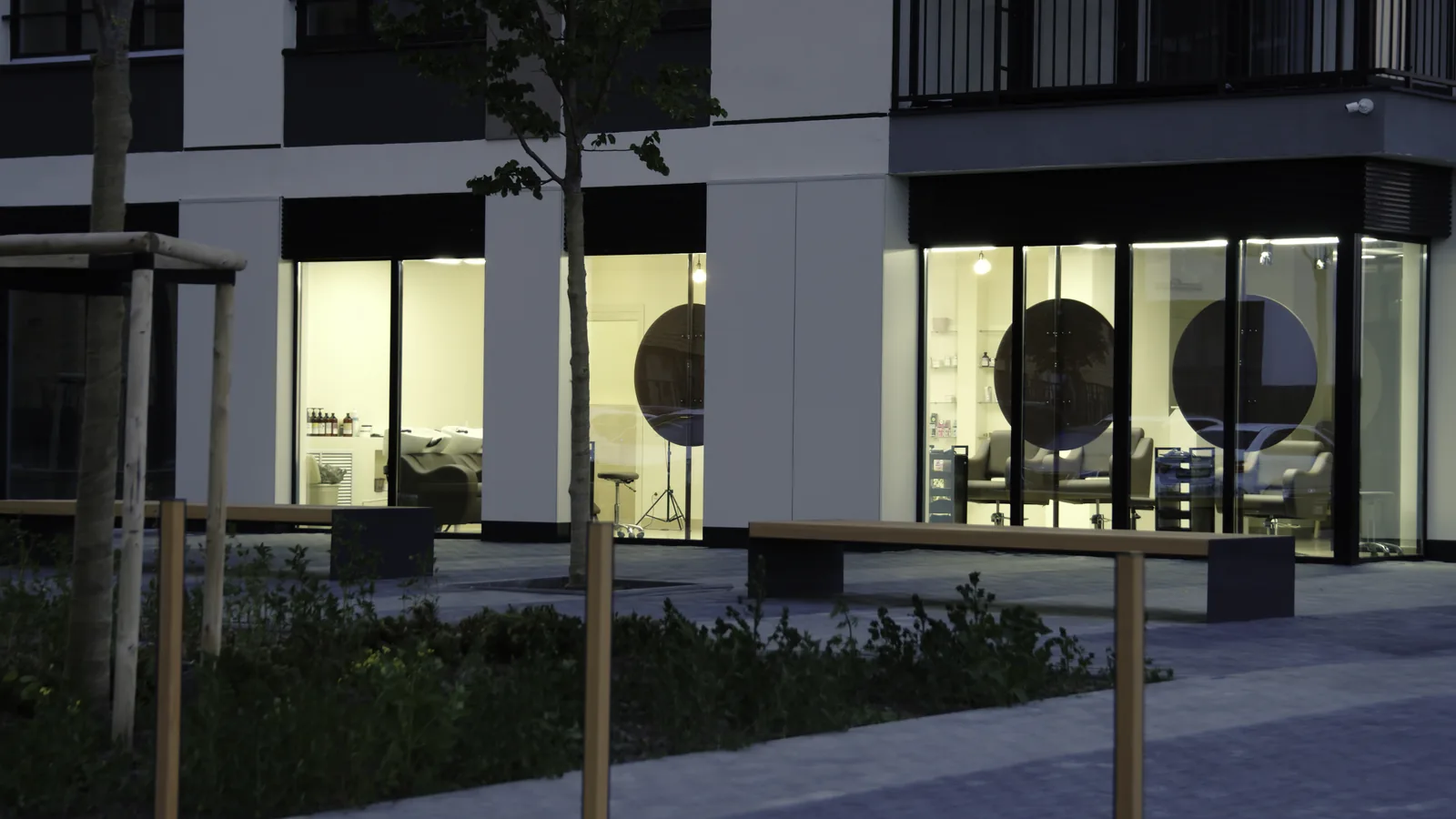
A Tenant Wants Two Thirds of This Long Beach Building. Someone Has to Spend $10 Million First.
An insurance brokerage will take 22,000 square feet in Long Beach, but only after a $10 million Class A renovation. Nassau's IDA hears it Tuesday.
By Melville Chamber of Commerce ·
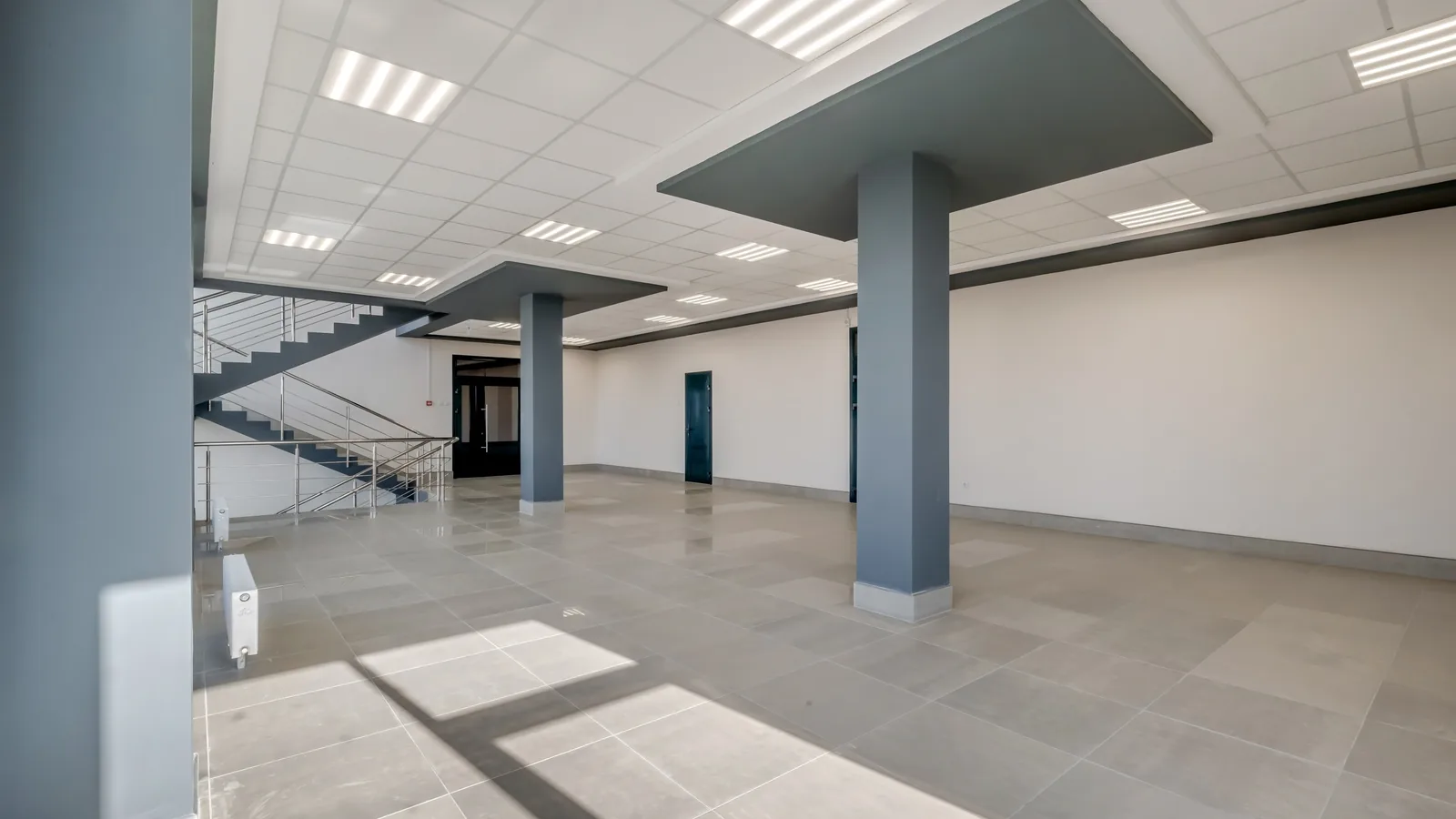
A three story office building on West Park Avenue in Long Beach has been empty long enough that the next tenant will not sign a lease until somebody rebuilds it first. On Tuesday morning the Nassau County Industrial Development Agency holds a public hearing on whether to help.
The building
The property is 367 West Park Avenue: roughly three quarters of an acre, improved with a 33,000 square foot office building over three floors. It was medical offices once. It is vacant now, and the application filed with the agency describes a building that has deteriorated both physically and economically to the point where it no longer attracts the quality of tenant needed to sustain it.
The applicant is BSD Long Life LLC, listed at 52 East Park Avenue in Long Beach, a few blocks from the building it wants to buy. Avraham Walkin signs as a member. The filed activity code is the one for lessors of nonresidential buildings, so this is a landlord buying a building to let it, not an occupier buying a home for itself. The company is in contract, and has already committed about $150,000, being a $100,000 deposit on the acquisition and roughly $50,000 in professional fees.
The tenant is the whole mechanism
What makes this filing worth a member's attention is not the building. It is the condition attached to the tenant.
The applicant has signed a letter of interest with an insurance brokerage that would take about 22,000 square feet, two thirds of the building. That letter is conditioned on the applicant acquiring the property and renovating it to a Class A standard. The tenant is not negotiating rent. The tenant is waiting on the physical condition of the asset.
This is the part of the Long Island office vacancy problem that a headline vacancy rate does not show. The usual assumption is that empty space clears if the asking rent falls far enough. Below a certain building standard that stops being true. A credit tenant with a choice will not take tired space at any rent, because the rent is a small fraction of what it costs them to put people in a building. So the space does not re let cheaply. It sits, and it keeps sitting, until somebody puts capital into it.
What the ten million buys
The total project cost is $10 million. The application breaks it out: $3.5 million to acquire the land and building, $4.65 million for construction and renovation, $300,000 of infrastructure work, $150,000 of site work, $150,000 in architectural and engineering fees, and the balance across legal, financial, professional and other soft costs. Seven million dollars of that comes from a conventional mortgage and the rest from equity. The applicant records no public sector money in the capital stack.
The work starts with about $400,000 of interior demolition on acquisition. After that: structural steel to open up the floor plate, facade improvements, modernized heating, ventilation and air conditioning, elevator upgrades, and rebuilt conference rooms and lobby. The applicant expects to finish within eighteen months of closing.
On employment, the filing projects fifty full time equivalent construction jobs over the build. For the permanent jobs the renovated building is meant to house, it sets out salary ranges rather than headcounts: $85,000 to $105,000 for management, $65,000 to $80,000 for professional roles, $55,000 to $70,000 for supervisors, $45,000 to $55,000 for administrative staff and $38,000 to $45,000 for laborers. It also projects $350,000 of goods and services purchased in the second year after completion and $400,000 in the third, with about half of that sourced inside Nassau County.
An unusual ask
The agency is being asked for three things: a payment in lieu of taxes agreement running fifteen years, a sales tax exemption on the materials for the renovation, and a mortgage recording tax exemption on the financing.
The PILOT request is the one worth noting, because of what it does not ask for. The application states that the applicant is not seeking a reduction in the current property taxes, only stability and predictability going forward, with the current level held for a period and a reasonable escalation after that across the fifteen year term. The stated reason is that real estate taxes in Nassau County are high and unpredictable, and that the unpredictability, more than the level, is what makes the investment impossible to underwrite at prevailing rents.
That distinction is the argument a member should test on Tuesday. An abatement transfers cost to other taxpayers. A freeze with a defined escalator mostly transfers risk, from the owner to the assessment roll, and it is a materially different thing to grant.
What it means for members
If you hold or lease second generation office space anywhere in Nassau, watch what the agency does with the predictability argument on Tuesday, because if a fifteen year tax stabilization is what unlocks a stalled repositioning, that is the template every owner of a tired building on your block will reach for next, and it will shape what competes with your space. If you are a contractor, the demolition package alone is $400,000 and the build is budgeted at $4.65 million with roughly half the ongoing purchasing intended to stay in the county. The hearing is at eleven o'clock on Tuesday the twenty second of September at 1 West Chester Street in Long Beach, and it is livestreamed.